
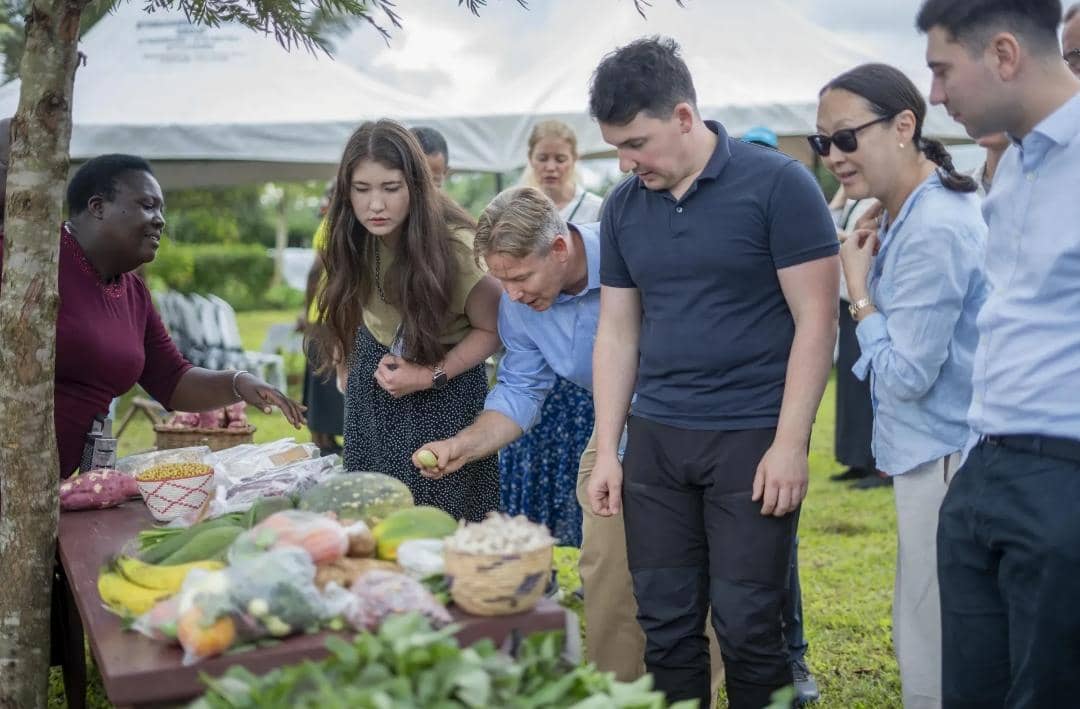
In the heart of Kamwenge District — home to thousands of refugees — the once remote and sanitation-challenged village of Byabasambu has become a model of transformation.
Once plagued by open defecation and poor hygiene, the community now boasts clean homesteads, climate-resilient toilets, and healthier families thanks to a five-year Water, Sanitation and Hygiene (WASH) programme supported by Unicef Uganda.
Implemented under Uganda’s WASH framework, the initiative combines Community-Led Total Sanitation (CLTS) with the innovative Market-Based Sanitation Improvement Approach (MBSIA), which is reshaping hygiene practices in both refugee and host communities.
Kamwenge District, with a population of about 552,000 — nearly half of them refugees — has long faced challenges in access to safe water, healthcare, and education.
In response, the Government of Uganda, in partnership with Unicef and local stakeholders, expanded community sanitation outreach and introduced a market-based model that encourages household investment and private-sector participation.
“The new market-based sanitation model empowers households to take ownership of their health,” said Gertrude Kengonzi, the District Environmental Health Officer.
“Families are now investing in durable toilets and improved sanitation products through trained masons and promoters. This approach has created jobs, improved hygiene, and strengthened local economies.”
Through the MBSIA, trained artisans help households design affordable, climate-resilient toilets using locally available materials, ensuring both sustainability and local ownership.
Recently, Byabasambu Model Village hosted a delegation of eight Swedish Members of Parliament on a fact-finding mission to assess the impact of Sweden’s Official Development Assistance (ODA) to Uganda.
The lawmakers toured households, interacted with residents, and observed demonstrations linking nutrition, hygiene, and health.
For residents like Grace Bonabana and Godfrey Moni, the programme has been transformative.
“Very few homes had toilets before,” Bonabana recalled.
“People used to go to the bush, and diseases like cholera and dysentery were common. But things have changed. We now have clean toilets, handwashing stations, and drying racks — our homes are healthy and dignified.”
Moni, proudly showcasing his modern toilet and homemade “tippy-tap” handwashing device, said the changes have improved livelihoods.
“Most homes now have strong, sustainable toilets. The number of disease cases has dropped, and families are saving money. We can send our children to school and invest in small projects like poultry and goat rearing,” he said.
According to Kengonzi, the programme’s benefits go beyond sanitation.
“We’ve trained 78 masons to build climate-resilient toilets, improving both hygiene and livelihoods,” she noted.
“Over 27,600 households have benefited, and 1,000 sato pans have been distributed as part of a wider community hygiene education effort.”
Dr William Mucunguzi, the Kamwenge District Health Officer and Unicef focal person, highlighted the tangible infrastructure gains.
“We’ve constructed modern latrines in three primary schools and two health facilities — all equipped with handwashing and menstrual hygiene stations,” he said.
“We also installed chlorine generators in health centres to ensure access to safe water and trained 29 health workers and 30 school leaders in infection prevention.”
He added that latrine coverage has risen from 86 percent in 2019 to 95.3 percent. “These are not just numbers,” Dr Mucunguzi said.
“They represent real progress in community health, reduced disease outbreaks, and improved well-being.”
Kamwenge District LC5 Chairperson Joseph Kalungi commended Unicef and the Swedish Government for their long-term support.
“Our country has an open-door policy for refugees, and here in Kamwenge, we ensure services benefit both Ugandans and refugees,” he said.
“The WASH programme has reduced diarrheal diseases and intestinal worms, improving children’s growth and school attendance.”
Kalungi added that creating water boards and mason cooperatives has helped strengthen local ownership.
“We are training local mechanics to maintain water systems, empowering school health clubs, and transforming masons’ groups into enterprises. This is how development becomes sustainable — when communities themselves lead the change,” he said.
Unicef Country Representative Dr Robin Nandy praised the Kamwenge initiative as proof that sustainable sanitation is achievable through partnership and innovation.
“Improving sanitation is not just about toilets — it’s about dignity, health, and opportunity. Kamwenge shows what’s possible when communities and partners work together to build a cleaner, safer, and more equitable future,” he said.
With continued investment, Kamwenge’s success could soon serve as a national model for sustainable, market-driven sanitation — giving both Ugandans and refugees a healthier foundation for the future.
